
English Degrees at MCLA
Study literature, writing, and cultural expression while developing the analytical and communication abilities central to the humanities.
Engage Deeply With the Power of Words.
Request Info Free Discourse Statement
Social Justice Commitment Apply
Degree: Bachelor of Arts (B.A.)
Program Delivery: On Campus
Next Term: Fall 2026
Why Choose English at MCLA?
MCLA's English department combines the study of literature and writing with practical learning experiences that prepare students for professional and creative careers. Students develop strong analytical, research, and communication skills while exploring literature, cultural expression, media, and creative writing within a collaborative liberal arts environment.

Hands-On Publishing Experience
Students gain real editorial and publishing experience, including competitive internships with Tupelo Press in North Adams, where they contribute to editing, design, and literary production.

Undergraduate Research & Projects
Students actively participate in research and creative projects and collaborate with faculty on literary and cultural studies.

Dedicated Faculty Mentorship
Small class sizes create a close academic community where students receive individualized mentorship from experienced faculty and accomplished alumni.
Career Outlook & Program Outcomes
Careers connected to writing, communication, and media remain central to many industries.
Where This Degree Takes You
An English degree can lead to careers in publishing, media, education, communications, nonprofit organizations, and other fields that value strong writing and critical engagement with culture.
Career Opportunities
- Author or creative writer
- Editor or publishing professional
- Public relations specialist
- Grant writer
- Educator or academic researcher
- Communications specialist
- Media and cultural critic
Explore Our Programs
MCLA offers several English degree pathways. Learn more about specific curriculum structures and course requirements:
Skills You Will Develop
Spotlight Courses


Faculty
Meet Your Mentors


2025-26 English Events


English Features

Spires is MCLA’s student-run, student-organized, and student-designed literary arts magazine. Throughout the fall and spring semesters, we collect creative prose, poetry, and art from the student body, with a new Editor-in-Chief bringing fresh energy each year.

The English & Philosophy Department brings renowned poets, fiction writers or essayists to campus each semester, to meet with students and to offer a public reading of their work. The Spring 2026 Visiting Writers Series features Fanny Choi and Rena J. Mosteirin.
Alumni Spotlight

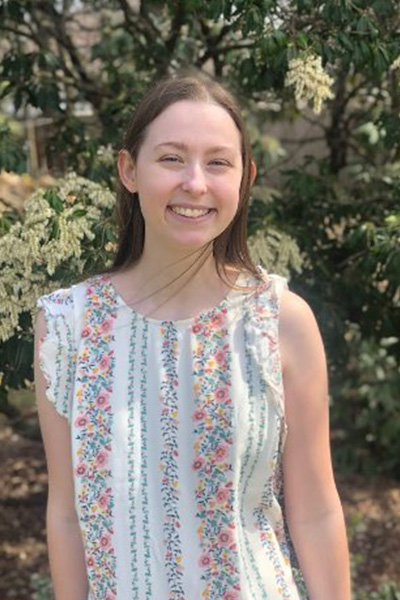
Alumni Spotlight
"I am most grateful for the faculty I met at MCLA, all of whom were thoughtful, experienced, and highly influential to me not only as a student, but also as an artist. My professors were knowledgeable and connected in the field, providing me opportunities for internships, extra-curriculars, and conference trips that gave me real-world experience and a life-long bond with my collaborators."
"During my time at MCLA, I received amazing one-on-one support from dedicated professors who are passionate about their work as writers, scholars, and educators. Their guidance, mentorship, and encouragement are the reasons I am now pursuing my MA"
FAQs
- Communicate effectively in oral, written, and other forms of discourse.
- Demonstrate an ability to work effectively in collaborative learning and problem-solving environments.
- Craft thoughtful, creative texts that demonstrate a keen sensitivity to language, form, style, and effect.
- Analyze texts closely and critically, demonstrating how language, style, form and genre create effects and shape meanings.
- Articulate an understanding of how cultural, historical, and ideological contexts condition both the creation and the reception of texts across time and in today’s complex, diverse world.
- Use various critical methods and theoretical frameworks in scholarly dialogue with others about the interpretations of texts.
- Design and conduct research, applying it to problem-solving and contributing to various forms of public discourse.
- Employ relevant technologies in the production, critique, and presentation of texts.
- Reflect on how the knowledge and abilities developed in the English/Communications Department transfer meaningfully to other academic and non-academic, real-world situations.
Get ready to be surprised. Careers for English majors are way more varied—and more lucrative over time—than you might expect, especially in today's economy, where transferrable skills are essential. Here are some of the careers our English Majors have followed immediately after graduation:
- Filmmaker
- Student Affairs administrator at Public University
- Published novelist
- Managing Editor of Literary Publishing Company
- Social Media Marketer
- Co-president of Theater Company
- Journalist at Regional Newspaper
- Non-profit manager
- Published poet
- Elementary School Counselor
- Communication & Outreach Communicator at Public Library
We also have an excellent track record in helping our students get accepted into competitive, often fully funded graduate programs in Creative Writing, Literary Studies, Library Sciences, Writing and Rhetoric Studies and more, at programs including NYU, Cornell University, Northeastern, University of Montana, Case Western University, UMASS Amherst, Denver University, University of Washington, and Sarah Lawrence University.
Thanks to engaging faculty, intriguing classes and plenty of opportunities to bond with fellow students in and out of the classroom, MCLA is one of the best colleges for English majors. An English degree from MCLA prepares you to think about big questions and ideas and helps you develop valuable real-world skills.
Yes. English pairs well with many majors, and students often combine it with programs such as education, communications, or political science.
English courses at MCLA are designed with small class sizes that encourage discussion, collaboration, and individualized mentorship.
Students pursue internships in publishing, communications, media, education, and nonprofit organizations. Opportunities include placements with literary presses and cultural institutions.
Looking for More Information on MCLA's English Degree Programs?
Reach Out to Us
We’ll share helpful information and student stories, and we promise not to flood your inbox.