
MCLA Physics Student Treyana Holiday Presents Research at National Conference in Denver
December 16, 2025
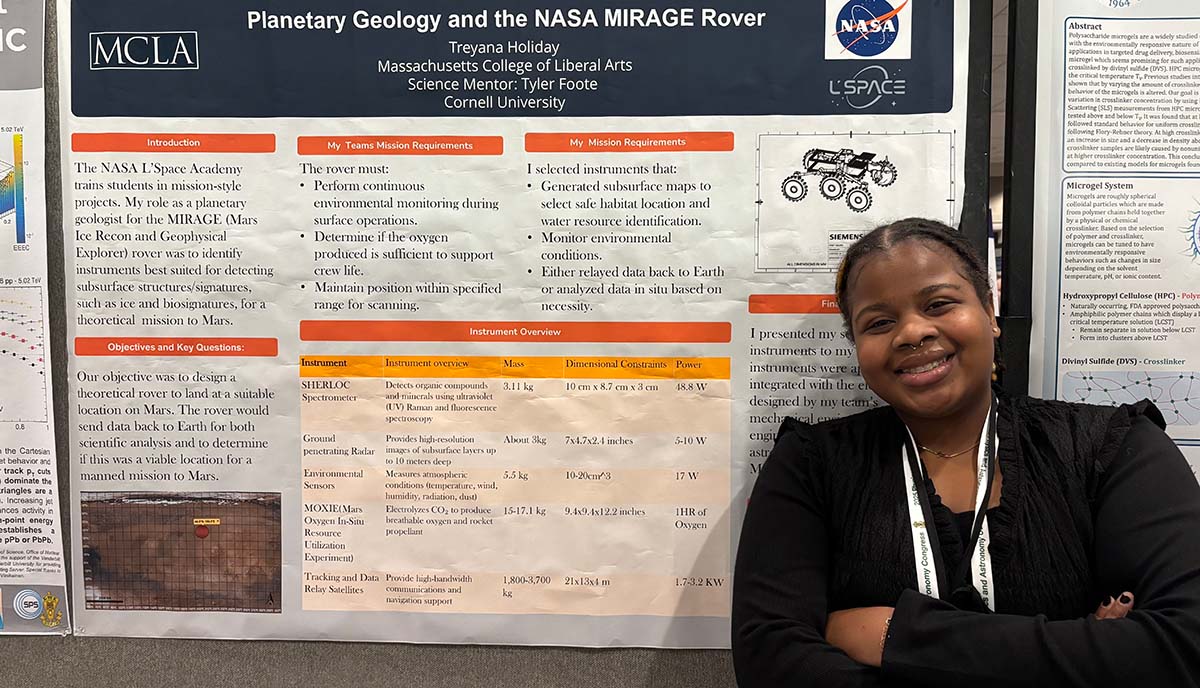
Treyana Holiday '28, a physics major at Massachusetts College of Liberal Arts, recently traveled to Denver with fellow MCLA students and faculty members Dr. Kebra Ward and Dr. Emily Maher to attend the triennial Society of Physics Students Physics and Astronomy Congress, the largest gathering of undergraduate physics and astronomy majors in the country. Holiday was there to present the summer research she did with the NASA L'Space Program. About 800 students attended this year's conference.
"Seeing and interacting with the students is very encouraging," Holiday said. "At MCLA we have a small physics department. Being surrounded by hundreds of worldwide physics and astronomy students inspires me to continue with my degree. Physics is hard, and sometimes it's discouraging not seeing a wide variety of students who are interested in the same things that I am. So being a part of this community uplifts my desire for physics."
The most memorable part of the conference for Holiday was Dr. Renee Horton's workshop, where participants explored her book "Reframe Our Picture: From Surviving to Thriving." "The activity focused on reflecting on our lives now, how we got here, and what steps we are going to take to make sure our path is the best for us," Holiday explained. "This activity got me thinking about the achievements I've made since coming to MCLA and the mishaps that took place in my life that I didn't let discourage me." Dr. Horton, a trailblazing advocate for diversity in STEM and the first African American to receive a Ph.D. in Material Science with a concentration in Physics from the University of Alabama, visited MCLA in November as part of the Physics Department's speaker series supported by the American Institute of Physics Foundation.
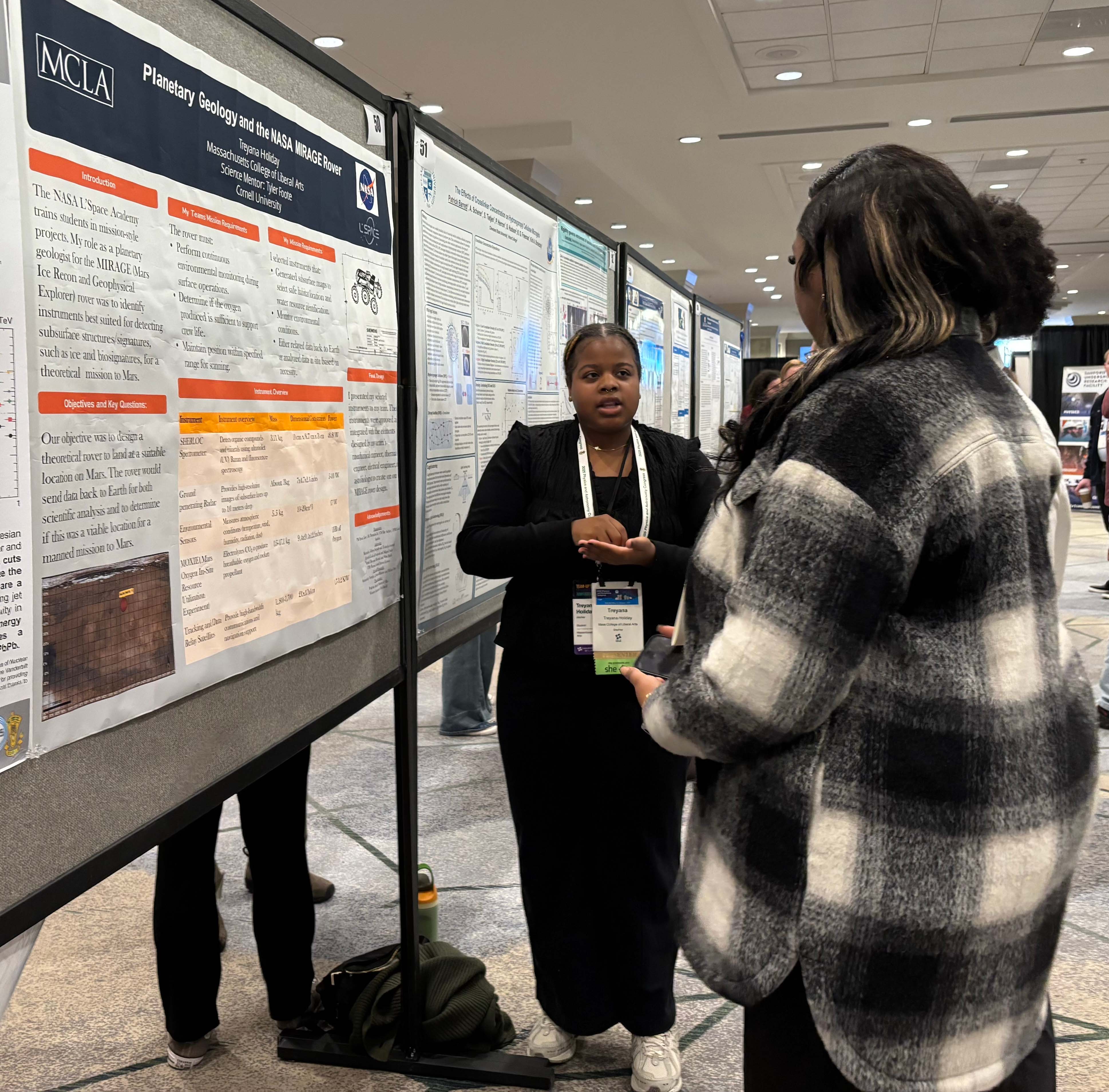
Holiday's presentation focused on researching and selecting specific instruments to search for subsurface biosignatures, like ice, on Mars. The poster presentation drew significant interest from conference attendees. "Many students wanted to hear about my process, and others focused their questions on the dimensional constraints of the instruments that I selected," Holiday noted.
Dr. Maher was impressed by Holiday's command of the material. "What really stood out to me was how confidently Treyana talked about her work," she said. "She wasn't just repeating what her group had done. She genuinely understood the physics behind the design, and she could explain why she chose the particular instruments in the context of the mission objectives."
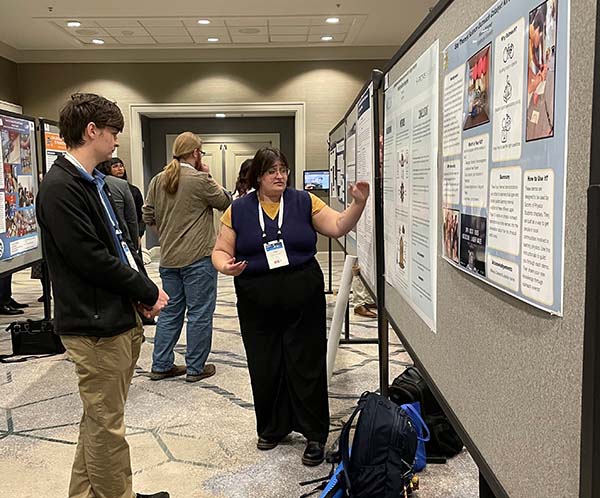
Holiday also participated in the Team Up Together Student Experience Conference (TUT-SEC), which occurred back-to-back with the Physics and Astronomy Congress. TUT-SEC is specifically for Team Up Together Scholars, students who face significant barriers to success, including African American students. Although Holiday formally presented her poster at the larger SPS Congress, she had many opportunities to discuss her research in the smaller, more intimate TUT-SEC setting beforehand.
"TUT-SEC provided a supportive environment where Treyana could refine her communication skills and connect with peers with similar experiences," said Dr. Ward. "This preparation meaningfully strengthened her confidence and effectiveness during the larger SPS Congress."
"I went to talks presented by physics Nobel Prize winners and got to meet other TUT students," Holiday said. "Everyone was welcoming and engaged in the talks and activities provided to help us better navigate our undergraduate and graduate studies. This community lifts me up."
According to Dr. Maher, experiences like this help students see themselves as physicists, not just physics majors. "At MCLA, students are not just learning physics in the classroom," she said. "They are taking part in national programs, working on real NASA mission concepts, and presenting their work to the wider physics community. When students take part in programs like NASA's L'Space Academy or present their work at a professional conference, they gain confidence, build networks, and recognize that they can contribute to science. Treyana's success is a great example of what our students can do when they're given the chance."
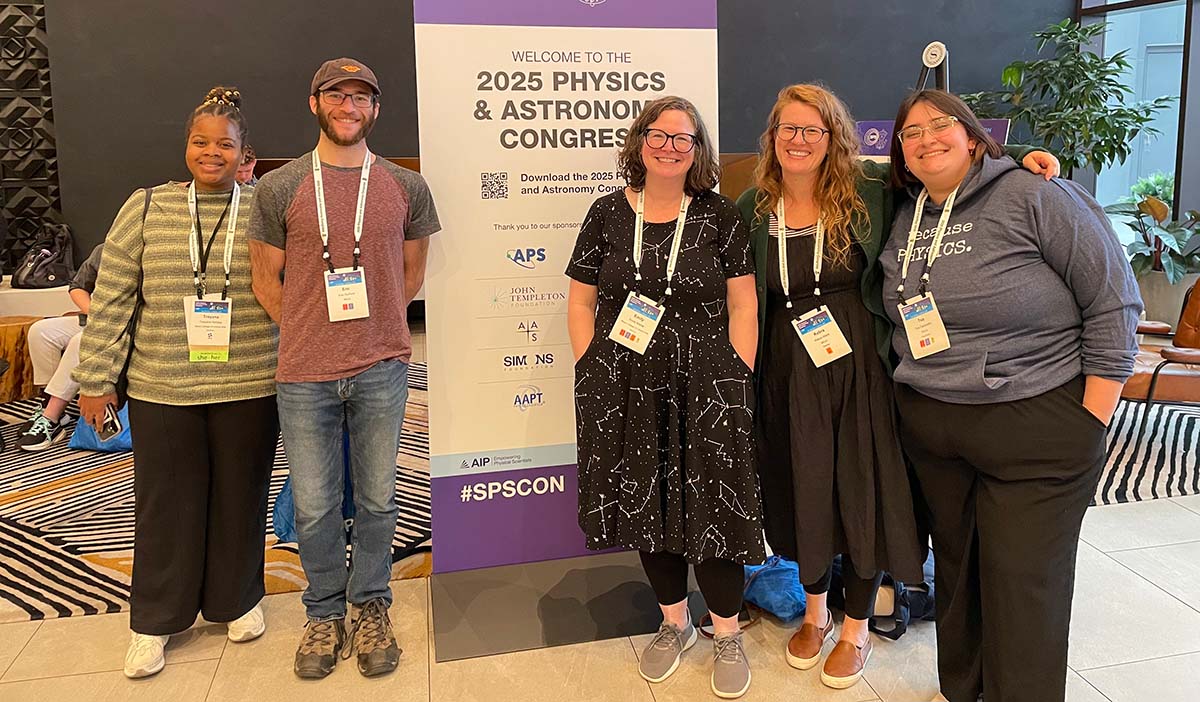
Treyana Holiday '28, Eric DuPont '26, Dr. Emily Maher, Dr. Kebra Ward, and Téa Caravello '26